
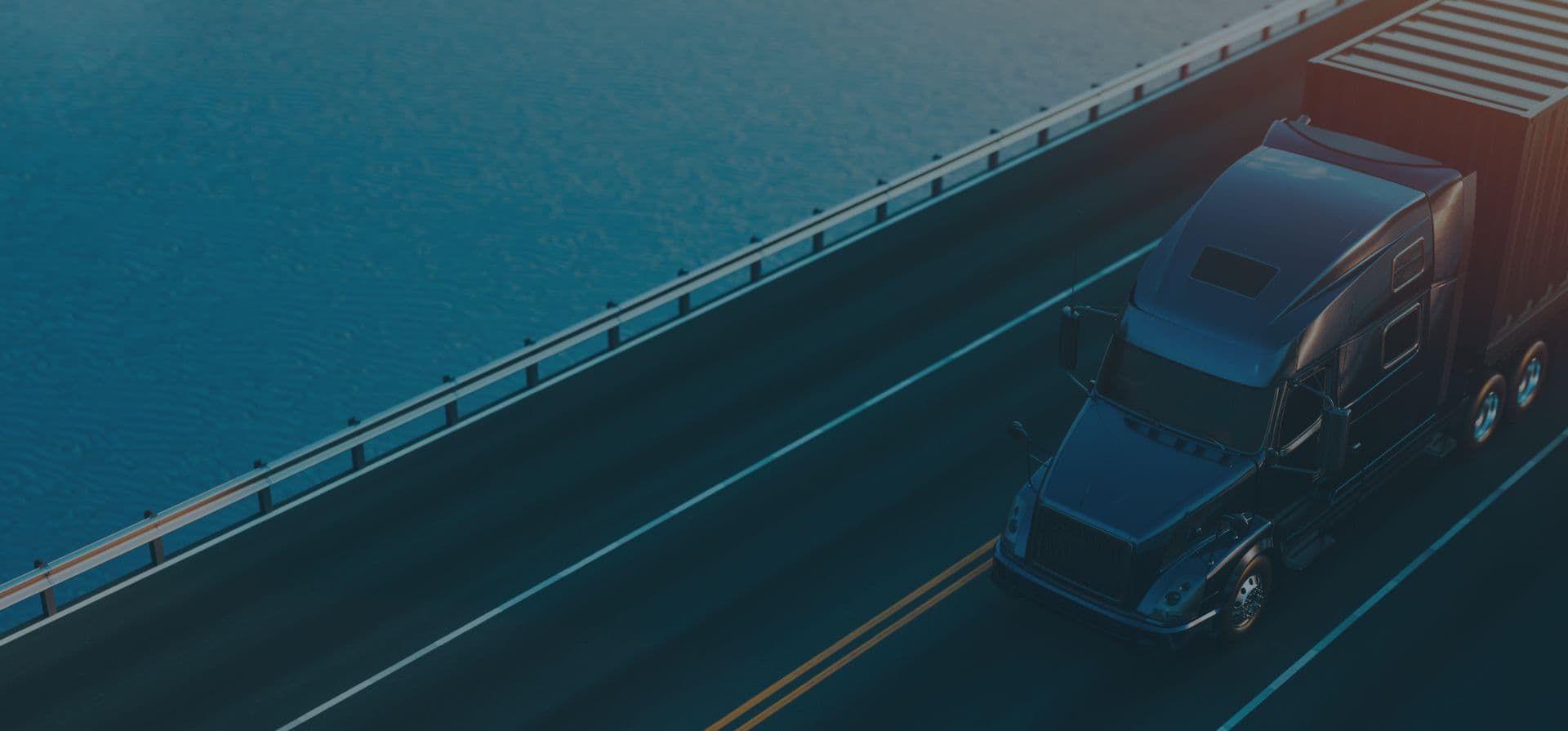
CANADA ↔ UNITED STATES
One partner. Two countries. No hand-off at the line.
Plenty of cross-border freight gets interlined at the border — one carrier to the line, somebody else beyond it, and a seam where things go missing. We book a single carrier to run the whole lane: one truck, one driver, one rep who owns the move from a dock in Ontario to a dock in Ohio, with the paperwork filed days before anyone reaches a booth.
0 mi
Of shared border
0
Crossings we run
0
Currencies invoiced
0
Rep, both sides
THE LINE
5,525 miles of border. Eight places we cross it.
Pick a crossing and watch the lane run. The truck stops where your freight stops — and moves the moment it's released.
Swipe the chart · tap a crossing below
PACIFIC HIGHWAY
Surrey, BC ↔ Blaine, WA
LANE
Vancouver → Seattle
DISTANCE
143 mi
TRANSIT
Same day
The west coast's commercial gateway. Short enough that a morning pickup in Vancouver makes an afternoon delivery in Seattle.
CLEARANCE, IN ORDER
The border isn't where the work happens. It's where the work shows.
A truck that waits at the line is a truck whose paperwork was late. Everything below is done before the truck leaves the yard — which is why a clean crossing usually costs minutes, not hours.
- 01
Paperwork before the wheels turn
Commercial invoice, packing list and — where the goods qualify under CUSMA/USMCA — a certification of origin that keeps them duty-free. We build the file with your broker before the driver is loaded, not at the booth.
- 02
Advance manifest, transmitted
Every truck is pre-filed electronically: ACE e-Manifest with a PAPS barcode heading into the United States, CBSA eManifest with a PARS barcode heading into Canada. The border knows what is coming before it arrives.
- 03
Your broker clears it
The importer of record's customs broker files the entry against that barcode and gets it released. If you don't have a broker on that side yet, we'll introduce you to one we work with.
- 04
Duties and taxes accounted for
Into Canada, importers post their own security and settle duty and GST through their CARM portal account. Into the US, duties are paid against the importer's bond. We tell you which of these applies before you ship, not after.
- 05
Across, and straight on
Cleared freight doesn't stop at a terminal on the far side. Same truck, same driver, same trailer seal — the crossing is a waypoint on the run, not an interline to a second carrier.
RUNNING LANES
Lanes we already run — and the ones we'll open for you.
PACIFIC HIGHWAY
Vancouver→Seattle
via Surrey, BC / Blaine, WA
COUTTS – SWEETGRASS
Calgary→Denver
via Coutts, AB / Sweetgrass, MT
EMERSON – PEMBINA
Winnipeg→Minneapolis
via Emerson, MB / Pembina, ND
SAULT STE. MARIE
Sudbury→Chicago
via Sault Ste. Marie, ON / Sault Ste. Marie, MI
BLUE WATER BRIDGE
Toronto→Chicago
via Sarnia, ON / Port Huron, MI
AMBASSADOR BRIDGE★
Toronto→Detroit
via Windsor, ON / Detroit, MI
PEACE BRIDGE
Toronto→New York
via Fort Erie, ON / Buffalo, NY
LACOLLE – CHAMPLAIN
Montréal→New York
via Lacolle, QC / Champlain, NY
Don't see your lane? Tell us where you ship — most cross-border lanes we run started as somebody's question.
CROSS-BORDER, HANDLED
Everything the line asks for, before it asks.
Truckload both directions
FTL and LTL northbound and southbound — the same truck and the same rep on either side of the line.
In-bond moves
Freight that clears inland instead of at the booth, moving under bond to a customs office or bonded warehouse.
Broker coordination
We work to your broker. Don't have one on that side yet? We'll introduce you to brokers we already move freight with.
CUSMA / USMCA origin
Where your goods qualify, we make sure the certification of origin travels with them so they cross duty-free.
Dual-currency rates
Quoted and invoiced in CAD or USD — your choice, locked at confirmation.
Temperature-controlled
Reefer capacity on cross-border lanes, with the cold chain unbroken through the crossing.
Returns northbound
Reverse logistics back into Canada handled as a proper lane, not an afterthought.
One point of contact
Your rep owns the whole move — pickup, crossing and delivery. Nobody hands you to another desk at the border.
BEFORE YOUR FIRST LOAD
Cross-border questions, answered plainly.
How much does the border add to transit time?+
On a pre-filed load with clean paperwork, usually well under an hour — often just the time it takes to hand over the packet and roll. Delay almost always comes from a document problem, which is exactly why we build the file days ahead of the pickup.
Do I need my own customs broker?+
The importer of record appoints the broker, so yes — but you only need one on the side you're importing into, and if you don't have one we'll put you in front of brokers we already move freight with.
Who pays the duty?+
The importer of record. Most goods made in Canada, the US or Mexico move duty-free under CUSMA/USMCA when they're certified as originating; where duty does apply, it's assessed against the importer's account, not the carrier's.
Can you quote in Canadian dollars?+
Yes. Tell your rep which currency you want to be invoiced in and we'll hold the rate in that currency, so the number on your PO is the number on the invoice.
What about freight that isn't cleared at the border?+
It moves in bond to an inland customs office or a bonded warehouse and clears there. It's a normal, everyday move — just say the word at booking so the manifest is built for it.
Is my cargo insured on both sides of the line?+
Yes — our cargo coverage follows the load across the border, and your rate confirmation states the limit before you ship.
Your freight doesn't stop being ours at the border.
Tell us the lane and the commodity. We'll come back with a rate, a transit time and exactly what your side of the paperwork looks like.